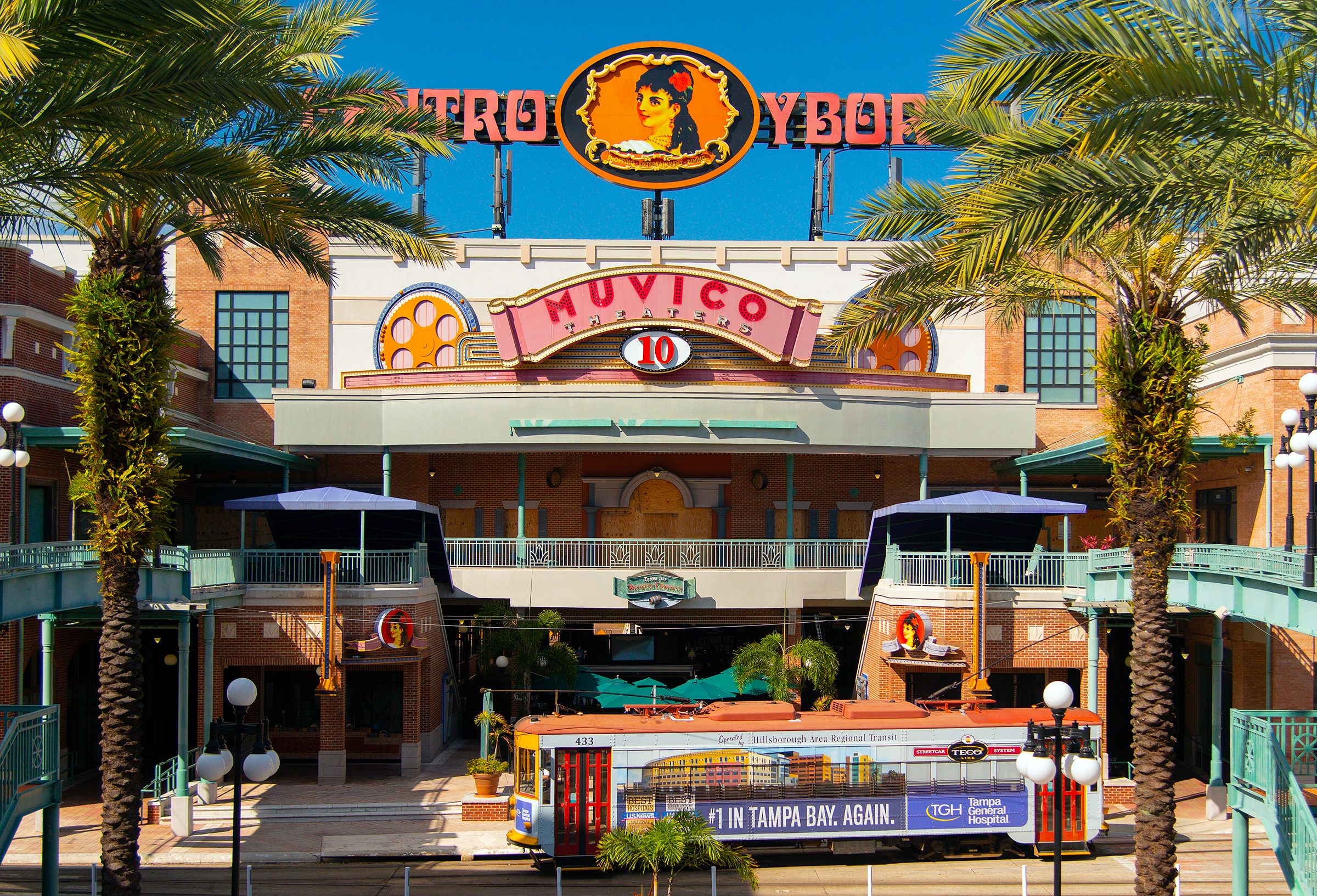
Ybor City doesn’t ease you in. You step off the free streetcar onto brick streets laid over a century ago, and the neighborhood just goes to work on you — wrought-iron balconies, cigar-factory brick, and the smell of something roasting slow behind a screen door. This is Tampa’s National Historic Landmark District, built by Cuban, Spanish, and Italian cigar workers in the late 1800s, and it’s still the most walkable, most alive few blocks in the Bay.
Start with the streetcar itself — the TECO Line Streetcar is completely free to ride, runs along a 2.7-mile route with 11 stops (four of them right here in Ybor, five more through the Channel District, two downtown), and comes every 15 minutes on weekdays, every 12 during peak hours. Weekday hours run 7 a.m. to 11 p.m., with Friday and Saturday nights stretched out to 2 a.m. for exactly the reason you’d guess.
For lunch, there’s really one required stop: the Columbia Restaurant at 2117 E 7th Ave, Florida’s oldest restaurant, open continuously since 1905 when Casimiro Hernandez Sr. opened it as a sixty-seat corner café for cigar workers. It’s now the largest Spanish restaurant in the world, still run by the same family five generations later, and it still puts on live flamenco every night but Sunday — $10 cover for anyone over 12, and worth every cent for the stomping, spinning spectacle of it in a dining room that spans a full city block.
After lunch, walk two blocks to the Ybor City Museum State Park at the corner of 9th Avenue and 19th Street, housed in the old Ferlita Bakery building. Four dollars gets you in (free for kids five and under), Wednesday through Sunday, 9 a.m. to 4 p.m., and it’s the fastest way to actually understand what you’re walking through — the cigar rollers, the immigrant mutual-aid societies, the brick-by-brick story of how this neighborhood got built.
By evening, 7th Avenue turns into something else entirely — neon signs flick on, the century-old buildings that felt like a museum at 2 p.m. start spilling music and conversation out onto the sidewalk, and Centro Ybor’s plaza (with its landmark sign right over the streetcar stop) becomes the natural meeting point before everyone scatters into whatever bar or late show catches their eye.
First-timers, don’t overplan this one. Ride the free streetcar in, eat where the cigar workers ate, learn the real history for four dollars, and let 7th Avenue pull you the rest of the way. That’s Ybor City, and it’s one of the best free-to-cheap afternoons Tampa Bay has to offer.
Photo: Centro Ybor and a TECO Line streetcar by Peter K Burian, licensed CC BY-SA 4.0 (no changes made).