Gulfport has been called four different things. James and Rebecca Barnett settled here in 1868 and named it Barnett’s Bluff. By 1880 it was Bonifacio. In 1884, Philadelphia financier Hamilton Disston tried to rename it Disston City to match his vision of a busy port town — the U.S. Postal Service rejected the name because it was too close to another town’s in Hillsborough County, so it stayed Bonifacio anyway. In 1905 it became Veteran City, built around John Chase’s plan for a Civil War veterans’ retirement community. It didn’t settle on Gulfport until incorporation, October 12, 1910.
The Casino isn’t a casino
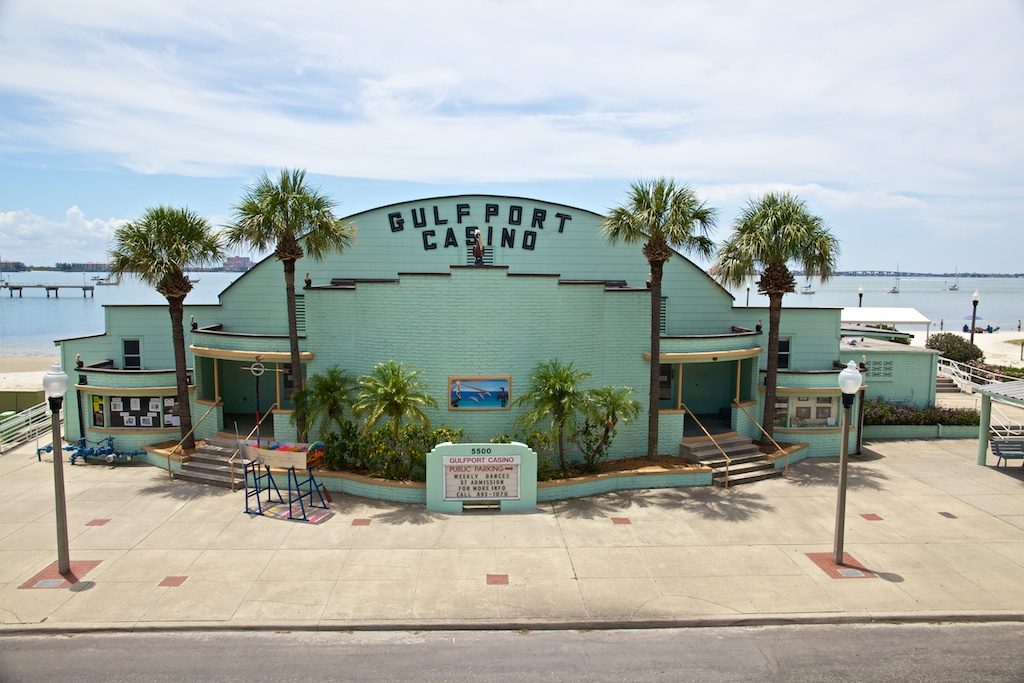
The Gulfport Casino, built in 1930, has never had a slot machine in it. “Casino” here means what it meant a century ago — a community gathering hall, not a gambling house. It’s still exactly that: a 5,000-square-foot dance floor in period style, hosting dance nights and private events today the same way it did the year it opened.
An arts town, not just a beach town
Gulfport sits on Boca Ciega Bay, a short drive from downtown St. Pete, and it’s built its identity around galleries and working artists rather than the resort-strip model most of Pinellas County’s coastline follows. Stetson University College of Law has been based here since 1954, which is its own quiet anchor for a town this size.
Good to know
Gulfport is in Pinellas County, on Boca Ciega Bay, a few minutes from downtown St. Petersburg. The 2020 census counted 11,783 residents, with a median age of 57.1 — noticeably older than most of the county.
For everything else on the calendar, there’s what’s on across Tampa Bay this August.
Photo: Jennywest1600, licensed CC BY-SA 3.0, via Wikimedia Commons.